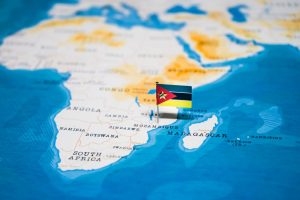

If you want to expand your Portuguese vocabulary beyond what you learn in school, learning some slang will help you understand the language spoken by native speakers in Mozambique. Learning these expressions will help you communicate more effectively with locals.
Mozambican slang is a vibrant blend of Portuguese and local Bantu languages, such as Changana and Makua, as well as influences from South Africa, creating a unique street dialect. It encompasses informal vocabulary, including street language and text shortcuts that native speakers use daily. Portuguese slang features in music, films and everyday conversation, enabling you to follow real-life discussions and connect with Mozambican culture on a deeper level. Grasping these patterns bridges the gap between the formal Portuguese taught in textbooks and the language that people actually speak on the streets, on social media, and on beaches in Mozambique.
A word of caution: Context matters tremendously when using slang – many terms are appropriate for use with friends, but would be considered rude when used with strangers or in professional settings. Just as you’d dress differently for a job interview than for a weekend barbecue, you should match your language register to your audience.
Greetings & ice-breakers
Bom dia — Good morning
Boa tarde — Good afternoon
Boa noite — Good evening
Ola — Hello
Como estas — How are you?
Tudo bem? — Is everything good? (more casual)
Como vai — How’s it going? (to which you can respond, tudo bem, if everything is good) – also more casual
Até amanhã — Until tomorrow, see you tomorrow
Tchau — Goodbye
Do you speak English?: Voçe fala inglês?
I’m English (male): Sou Inglês
I’m English (female): Sou Inglesa
Asking for things
eu care — I would like… um cafe com leite (a coffee with milk), or o menu (the menu), for example
a’cabou? — Is that all? or Is it/Are you finished?
Estou a pedir : I’m asking
Não sei : I don’t know
quali-sensa — Excuse me…
por favor — Please
Obrigada/Obrigado — Thank you (say obrigada if you’re female, obrigado if you’re male)
Miscellaneous
hoje – today (silent H, pronounced auj)
primera – first
segunda – second
depois — then, followed by
amanhã – tomorrow
outro dia – another day
d’escupa — apologies, or sorry
falar — to speak
muito — much, a lot
Ta Nice! : That’s nice!
Estou biz : I am busy
How much does it cost?: Quanto custa?
Can I have the bill?: Peço a conta
Cultural Sensitivity and Language Etiquette in Mozambique
While a lot of travel advice focuses on logistics, such as what to pack, where to stay and how much to tip, many of the moments people remember most are social. These moments can happen at the beach, in a restaurant, in a shop, at a guesthouse, or even in the first ten seconds of an interaction. In Mozambique, these moments tend to go more smoothly when you understand the basic etiquette involved.
As you travel through Mozambique, it is important to be mindful of language etiquette, particularly in rural areas and when interacting with indigenous communities. Mozambique is not just another holiday destination. It’s a country where ancient traditions blend with modern life. A simple gesture can either open doors or accidentally close them. Mastering cultural sensitivity and language etiquette in Mozambique requires a warm, community-first approach. As Portuguese is the official language, learning a few basic phrases will instantly open doors.
When you show respect for local customs, something beautiful happens. Locals will welcome you with genuine warmth. A local might invite you to share a meal with their family. Shop owners become friends instead of just vendors. You stop being a tourist and start being a welcome guest.
SpeakPortuguese, your translation Partner
SpeakPortuguese (SP) is a leading provider of Portuguese translation services, with a team of native translators who can overcome linguistic and contextual differences.
Whether you want to localise your software to reach the Mozambican market or translate your book into Portuguese, we are here to help. We are committed to meeting all your Portuguese translation needs, and will work closely with you to ensure you receive the best possible service.
Request a Free Quote.
Tel: 012 348 3134 | Mobile: 081 347 6060 | Email: Info@speakportuguese.co.za | Website: www.speakportuguese.co.za